Featured Post

MABUHAY PRRD!

Saturday, February 20, 2016

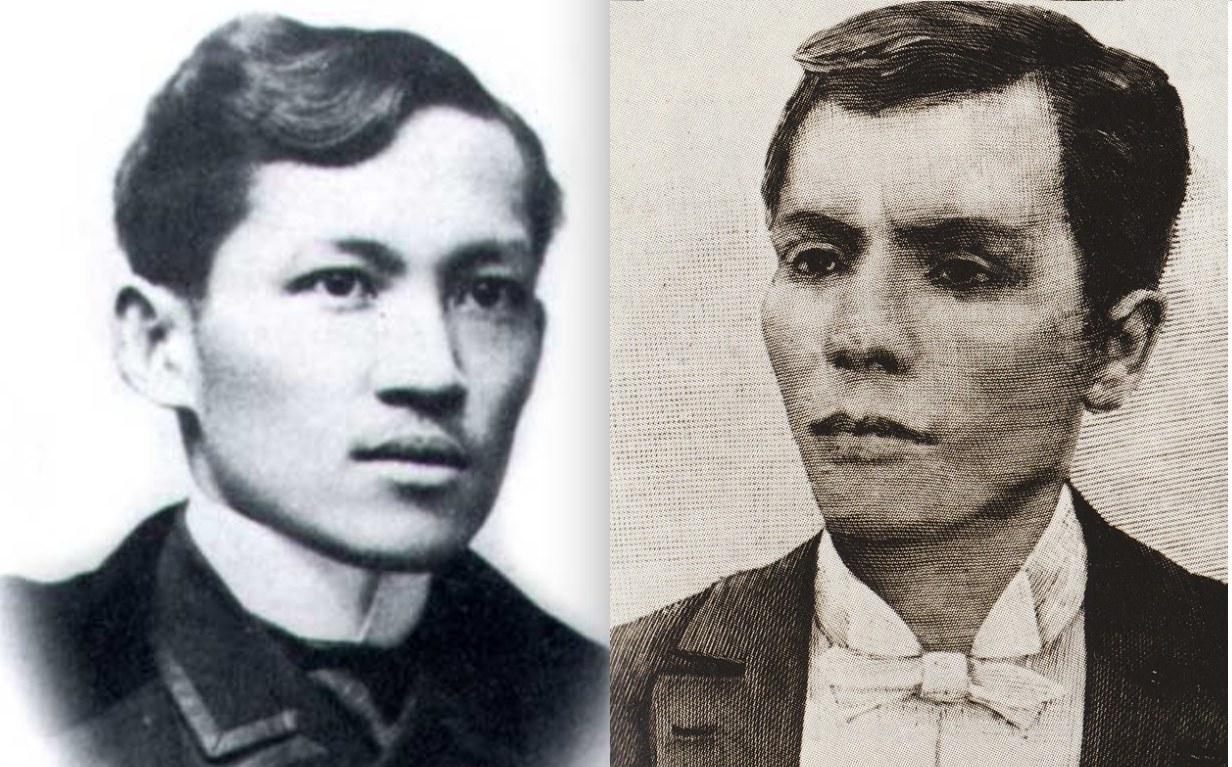
Rizal the Federalist; Bonifacio the Unitarian

RizalBoni
by Erwin S. Fernandez
Abung na Panagbasay Pangasinan
(House of Pangasinan Studies)
Although José Rizal and Andrés Bonifacio met on some points in their politics, they diverged from their concepts of Philippine nation and government. In his classic essay, Filipinas dentro de cien años, Rizal predicted that the Philippines “will probably declare themselves a federal republic.” How and why did Rizal come to suggest federalism, which did not happen in the long run? I will trace the origin of his thinking in the context of his life and works. On the other hand, Bonifacio envisioned a “Haring Bayang Katagalugan.” Again, what were the sources of his idea of a unitary Tagalog republic, which when hijacked by the ilustrado nationalists led by Aguinaldo was transformed into a “República Filipina”? Although Rizal’s prediction did not materialize, the idea of a federal republic was resurrected in a draft of a constitution by a group of prominent Filipinos and submitted to the first Philippine commission, which I will examine. Finally, I will state the implications of this understated yet fundamental difference between Rizal and Bonifacio in Philippine historiography and in the continuing search for an alternative system that includes rather than excludes the marginalized, respects the diversity of the nation and empowers the people in their communities.
Pitting Rizal and Bonifacio would seem to invite a lot of flak from Rizalists and Bonifacists. But one cannot help because there is a growing consciousness among the younger generation how the present political system hinders rather than encourages growth in the countryside after more than a century of experiment in a centralized Unitarian presidential setup. Since both Rizal and Bonifacio are national heroes who fathered the Philippine nation, it is only proper to investigate what kind of political system they had in mind for the country after their eventual separation from Spain. Let me begin with Rizal.
Rizal and his República Federal de Filipinas
Rizal predicted that after a hundred years, the Philippines might become a federal republic. His prognosis did not materialize. What must have been the source for this idea? “Filipinas dentro de cien años”, Rizal’s perceptive essay, graced the pages ofLa Solidaridad on 15 June 1889 to 1 February 1890. By this time Rizal was in London annotating Morga at the British Museum. It was seven years after he set foot in Madrid meeting some of its intellectual giants. One of them, Francesc Pi y Margall was on friendly terms with Rizal during his student days (Schumacher 1997, 56n).
When Rizal met Pi sometime in 1882 (Aseniero 2013, 20), the 58 year-old Catalan statesman has retired from politics. Involved in Spanish politics since 1854, he was short-time president of the First Spanish Republic of 1873. Upon his retirement, he returned to literature writing about his experiences on the Republic in La República de 1873 (1874), on his concept of the nation in Las Nacionalidades (1876), some literary pursuits in Joyas Literarias (1876) and on the history of America in Historia General de America (1878). Two years prior to meeting Rizal, Pi collected his various essays and speeches in La federacion (1880) including his 1868 prologue to his translation into Spanish of Proudhon’s Du principe Fédératif (Principle of Federation) and his 1869 speech in defense of republican federation in the Cortes. In 1883 he played a leading role at  the Republican Congress in Zaragosa in which a federal republican constitution for Spain was presented. A year later he released his Las luchas de nuestros dias and Observaciones sobre el carácter de don Juan Tenorio; the former Rizal was able to review in 1890 in La Solidaridad. Years later in Dapitan, Rizal would cite his meetings with Pi as having informed him about what was happening in the Philippines (Retana 1907, 274). It is not farfetched that prior to his review of Pi’s Las luchas Rizal must have read Pi’s earlier works, not excluding La federacion and Proudhon’s Principio Federativo or must have talked to Pi on these matters.
What was Pi’s political philosophy that must have attracted Rizal? Pi opposed constitutional monarchy and fought for the adoption of a federal republican form of government.  Federalism in Pi’s view would ensure the autonomy of regions, each with a distinct history, language and culture in contrast to a unitary republican form that would recreate a highly centralized system governed from Madrid to the peripheries.  It was the best alternative for Spain at that time because the mother country was facing the multifarious challenges of autonomy in the regions, the ineffectiveness of administrative structure, nationalist separatism in Cuba and social reforms (Aseniero 2013, 23).   The Philippines, in the 1883 draft of Spanish federal constitution, which Pi had a hand in, could assume to become one of the regions of the so-called Spanish federation but Rizal knew in 1889 that it was impossible. What he meant by República Federal de Filipinas must have consisted of autonomous regions from Luzon to Sulu forming a federal republic.
Bonifacio and his Haring Bayang Katagalugan
Bonifacio, however, had a different political project. While Rizal did not disown the name Filipinas, Bonifacio created a new one, that of Katagalugan and called all its inhabitants as Tagalogs. The Katipunan’s Cartilla defined its objectives and the construction of a national identity based on Tagalog: “Ang kabagayan pinaguusig ng katipunang ito ay lubos at dakila at mahalaga; papagisahin ang loob at kapisan ang lahat ng tagalog. Sa pamamagitan ng isang mahigpit na panunumpa, upang sa pagkakaisang ito’y magkalakas na iwasak ang masinsing tabing na nakakabulag sa kaisipan at matuklasan ang tunay na landas ng Katuiran at Kaliwanagan. Sa salitang tagalog katutura’y ang lahat nang tumubo sa Sangkapuluang ito; sa makatuid, bisaya man, iloko man, kapangpangan man, etc., ay tagalog din.”
[The objective pursued by this association is noble and worthy; to unite the inner being and thoughts of the Tagalogs through binding pledge, so that through this unity they may gain the strength to destroy the dense shroud that benights the mind and to discover to discover the Path of Reason and Enlightenment.The word tagalog means all those born in this archipelago; therefore, though visayan, ilocano, pampango, etc. they are all tagalogs.]
From 24 August 1896 to the first quarter of 1897 before the Tejeros convention, a revolutionary government was established headed by Andres Bonifacio, pangulo ng Haring Bayang Katagalugan or president of Sovereign State of Tagalogland (Guerrero, Encarnacion and Villegas 1996). What structure did this government have? Power was vested in the president advised by a council of state composed of secretaries of war, state, interior, justice and finance, elected most probably from the Kataastaasang Sanggunian or the Supreme Council, which has direct supervision over Sangguniang Bayan or Provincial or Municipal Council and Sangguniang Balangay or Barangay Council. From these sangguniang bayans, they must have elected a representative to the Kataastaasang Kapulungan or the National Assembly, which happened on 24 August 1896 in Kalookan. It was republican and unitarian in form as confirmed by the magazine La Ilustracion Español y Americana calling Bonifacio “el titulado presidente de la República tagala.”
We can only speculate how and where did Bonifacio take his idea of a unitary republic. An autodidact, Bonifacio read books, among others, on Spanish civil and penal codes, treatises on international law, Carlyle’s French revolution, Lives of presidents of the United States, works of Rizal, Eugene Sue’s The Wandering Jew, Victor Hugo’s Les Miserables and novels by Dumas, both father and son (Agoncillo 1996). Did he model his government after the First French Republic? Did he learn it out of his readings in international law? Did Emilio Jacinto, a prelaw student, help in formulating his concept of a Haring Bayang Katagalugan?
The 1899/1900 draft of a federal constitution
They were only called “eminent Filipinos” forming a committee whose leading figure was said to be sympathetic with Emilio Aguinaldo. It was the time when the Philippine-American War was raging and the First Philippine Commission headed by Jacob Gould Schurman went to the country to ascertain conditions, promote American authority and establish a civil government. The draft of the constitution was submitted to this commission.
On the first title, “Government and Nationality,” the first article describes the government of the Philippine Islands as “republican, federal, representative, and responsible” defining its territory according to the treaty of Paris and the second article defines the territory as divided into regions comprising of 11. It specifies which provinces belonged to a particular region, for example, the first region, the capital region, is composed of Manila, Cavite, Morong and Corregidor. Article III states that: “Each region enjoys complete legislative, governmental, and administrative autonomy, having power to dictate its own political constitution peculiar to itself, under the representative, republican, and responsible system indicated by this general constitution, by whose principles, declarations, and guarantees it must be inspired, with the exception that it can establish in any or all provinces of the region any generally practiced privilege worthy of respect. It shall be a constitution peculiar to the region and shall insure principally the administration of justice, municipal government of towns, and primary education. Under these conditions the Federal government guarantees to every region the possession and exercise of its institutions.”
It stipulates on who are Filipinos and includes a bill of rights. It defines the prerogatives of the federal government led by a governor-general who will reside in Manila and appointed by the president of the United States and delimits the powers of regions. Legislative powers are vested in the Senate and the Chamber of Deputies. The Senate is composed of 22 members, 11 of which are appointed and 11 of which are elected from each of regions’ legislature. The chamber of deputies is to be composed of 110 members apportioned to the 11 regions. It provides for a permanent commission when sessions of both chambers are closed. It also provides for Supreme Court of justice, the final arbiter in questions of law and jurisprudence.
The constitution did not prosper as the First Philippine Commission would state that: “In a country of such differences and varieties of population and social conditions there seems, if not any considerable real advantage, at least a theoretic propriety and fitness in grouping together by themselves, irrespective of existing provincial and district boundaries, the different tribes who inhabit the archipelago—Visayans, Tagalogs, Vicols, Ilocanos, etc.—and allowing them to manage their own local affairs; but that is a very different matter from constituting these new regions into independent and sovereign states, which delegate certain of their functions to the general government of the archipelago, as the framers of the above-mentioned constitution have actually done. To any such organization of Philippine states the commission is distinctly opposed; it is copied from the constitution of other countries in which the conditions are totally different from those which exist in the Philippines” (Report of the Philippine Commission 1900, 89). Of course, American colonial officials could not afford to give way some powers of the colonial government to the autonomous regions although they would know sooner or later that the Filipino Muslims in the south had different system of government and customs that could be accommodated in a federal system.
 Conclusion
The draft was an attempt to account for the differences and diversity found in the archipelago. Rizal must have known that. It was an archipelagic country divided geographically into regions, each with its traditions, customs and languages. The draft must also have been a response to the Federal Republic of the Visayas, which opposed Aguinaldo’s government. But the phantom of Bonifacio’s unitary republican government continued to hover over subsequent constitutions, first in the Biac-na-Bato constitution of 1897 followed by the Malolos Constitution of 1899, the 1935 Constitution up to the 1987 Constitution. It is characterized by an ethnocratic fascist state led by a selfish elite residing in the enclaves of Manila while the regions and their cultures wallow in poverty and destitution. Let me end by quoting Pi: “¿Qué le da fuerzas al poder: la centralización? Debo descentralizar. ¿Se la da la religión? Debo destruirla. Entre monarquía o república optaré por la república, entre la unitaria o la federal, optaré por la federal.” “La federación es un sistema por el cual los diversos grupos humanos, sin perder su autonomía en lo que les es particular y propio, se asocian y subordinan al conjunto de los de su especie para todos los fines comunes. Establece la unidad sin destruir la variedad.”
Yes, Rizal the federalist must have known that it is fundamental to establish unity without destroying diversity and it must be through a federal republic. On the other hand, Bonifacio had planted the seed for a Unitarian republic – one that might have been necessary in 1896 but no longer in this day and age – since it has benefited only the center as it became the controlling template for regions outside the capital, not only in terms of a bankrupt culture but also the handiwork of a predatory capital in the hands of a greedy oligarchic, mestizo elite.
https://correctphilippines.org/rizal_fed_boni_uni/

Philippine Progress: Shift in Sports, Shift in System

Posted on  by  
(First published on antipinoy.com on July 7, 2010)
At the time of this writing, millions of people around the world are obsessing about the 2010 FIFA World Cup in South Africa and the noise of the annoying Vuvuzela horn. From every continent, people speaking almost every language, coming from practically every race, creed, and color are excitedly watching the game called “Association Football.”  Unfortunately, there’s been relative calm in the Philippines, as hardly anyone, save for a few die-hard soccer fans, actually watched the World Cup closely.
Soccer, (coming from the word “association” in the sport’s full-name “Association Football”), called “Football” by everyone else, is also known as the world’s Beautiful Game. It is one of the most democratic sports ever – as Time Magazine recently described it. Anyone can play and excel in it: Rich or poor, light-skinned or dark-skinned, and most importantly, tall or short.  That last one is of utmost importance, considering that we Filipinos, most of whom are not very tall, are crazy about basketball – a sport that obviously favors tall players.
It has caused numerous ceasefires in many conflict zones as Israelis and Palestinians (Soccer is the biggest sport in the Middle East) or Rebel guerrillas and Government troops in continents like Africa or Latin America, often stop fighting just to watch the World Cup or other high-profile soccer matches on TV or listen to live commentaries on radio. During World War I, an informal Truce on Christmas Day in 1914 witnessed one of the most amazing displays of human fraternity as warring sides – British & French versus the Germans came together and played Soccer. After having played the game, made friends, and exchanged names & addresses, the soldiers simply could not shoot at each other once the truce ended, forcing their respective angry generals to send all of them to other fronts to fight against other enemies.
It’s a real shame because while Filipinos were glued to the NBA Finals at about the same time that the World Cup was just about starting, one unfortunate fact continues to be ignored by basketball-crazy Filipinos: We are never going to excel in sports that require height. Unlike most basketball-loving Filipinos, millions of average-height, barely middle-class, or even impoverished Africans and Latin Americans who play and practice soccer can actually dream of one day playing professionally for local or internationally-famous professional teams such as Manchester United (England), Juventus (Italy), Real Madrid (Spain), or Galatasaray (Turkey) – to name a few – and live a life of fame and fortune. These are dreams which are feasible as long as whoever plays and practices the sport has the competence, talent, and commitment, because the game-dynamics of soccer simply does not require height. It needs to be said that soccer legend Diego Maradona of Argentina became a soccer superstar with his very Filipino height of 5 ft 4.
In stark contrast to the meritocratic nature of soccer which does not care much about being born with the genes for height, the fixation that Filipinos have for basketball creates so many shattered dreams. Millions of young Filipinos are raised to love a sport that does not love them back. Many waste inordinate amounts of time practicing the game, wishing that they would be just like Kobe Bryant when they grow up, only to grow to their full height which might be just a few inches taller than Diego Maradona – a height that is just not cut for competitive basketball.
Filipinos even love to watch the NBA play-offs, but even if the Philippines is perhaps the most basketball-crazy country in the World (Americans are more obsessed with American Football and Baseball), countries with much more diversified sporting interests such as Mainland China and the former Yugoslav republics of Serbia, Croatia, etc, who all watch more soccer than they do basketball, have successfully sent players to the NBA. The Philippines has never sent a Filipino to the NBA!
Numerous honest discussions and debates have erupted about the need to shift the Philippines’ team sports focus from the excessively height-centric basketball towards the more height-agnostic soccer in order to focus on a sport in which every ordinary Filipino can excel. However, the rebuttals to the contrary range from such excuses as “The cultural temperament of Filipinos makes them prefer basketball because it has a faster-pace of point-scoring while soccer’s scores are low and goal-scoring is rare” to other excuses like“soccer requires a huge field in order to play while basketball needs a much smaller space.”

Who says you need a field to play soccer?
Both excuses fall flat considering that Filipinos are ethnically and even temperamentally similar to the Malays of Malaysia and Brunei (except in religion), both of whom enjoy and excel in soccer within the ASEAN region. It can be argued too that most Latin Americans, with whom Filipinos share common Spanish colonial history vis-à-vis Hispano-America and a very similar Iberian heritage with Portuguese-speaking Brazil, are somewhat culturally similar to Filipinos (especially in their sense of humor) and yet they too enjoy the sport immensely and are perhaps among the most excellent players of the Beautiful Game in the World. Most importantly, millions of impoverished Latin-Americans and Africans often practice playing soccer just about anywhere, be it on a small field, a dusty road, or even a small backyard. Some of the world’s highest-paid soccer stars come from such an impoverished background and they often cherish their childhood memories of growing up, playing soccer barefoot with plastic bottles or anything they can kick around as their ball, drawing lines on the ground to serve as their “goals.” It is just not true that Filipinos cannot shift to soccer.
The unfortunate fact is that Filipinos prefer to stick to whatever status quo they’ve grown used to. The real problem here is Inertia: the resistance to change.
Resistance to Change
Indeed, there is something really flawed about the situation, and Filipinos have to immediately correct it. Unfortunately, there seems to be something about us Filipinos that exacerbates our resistance to change: We have a tendency to refuse to admit that a problem exists, and often prefer to just ignore it and sweep the problem under the rug. In case that problem stares squarely at us, thereby making it impossible to ignore, quite often, we just outright refuse to do the work that would fix that problem and just endure the resulting mediocrity. Worse, many Filipinos prefer to make excuses that seek to justify such refusal to fix the problem, oftentimes reasoning – using intellectual dishonesty – that trying to fix the problem would actually make things worse.
We need not look far to see that this problem is not solely confined to the world of sports, in which increasing attention is being placed on the Soccer versus Basketball debate. Just recently, journalist and current Ambassador to Greece, Rigoberto Tiglao, recently wrote a two-part special on why Filipinos are not into Soccer.

The Tall Man’s Game
In it, he likened the need for Filipinos to carefully consider shifting from basketball to soccer and the difficulty in convincing Filipinos to do so, with the fact that many Filipinos still stubbornly refuse to at least attempt to consider the objective merits of the Parliamentary System as a possible option to replace the current Philippine Presidential System. It has been observed that the Philippine Presidential System’s skew towards popularity and name-recall , coupled with the Philippine Electorate’s preference for form over substance that unfortunately brought about perhaps the most embarrassing stain on the Philippines’ international reputation in 1998, when celebrity actor Joseph “Erap” Estrada won as President of the Philippines. The Philippines had another close call in 2004 when his fellow celebrity actor and close friend, the late Fernando Poe, Jr. almost won. And just recently in May 2010, the convicted-of-plunder ex-President Estrada who was deposed in 2001 ran again and took second place.
In the meantime, numerous politicians aspiring for the Presidency jockey for positions in the equally useless and non-representative Philippine Senate (whose Senators do not represent constituencies unlike in the USA, where Senators are elected per State), and as a result, the Philippine Senate has numerous “Senactors” (Senators who are actors) as well as politicians married to actresses or celebrities.
We continue to be a basketball-crazed society that is isolated from the soccer-loving rest of the world and yet we can’t even excel in this game we so love, nor can we send talented Filipino players to the NBA because basketball is a game that clearly favors height and we simply do not have the height that would at least give us a fighting chance.
In almost the exact same way, we continue to clamor for improvements in our lives, our economic livelihood, and the quality of our politics, yet because of a system of government whose electoral procedure (choosing the name of an individual candidate running for President) clearly favors “winnability” (popularity and name-recall) over competence, we end up with incompetent people who become President only because of their celebrity status or famous surnames. At other times, we also end up with leaders who – though sometimes competent – are forced to pander to the public lest they risk being unable to govern if they fail to play the popularity game.
When will we Filipinos realize that for us to excel in team sports, we need to choose a sport where competence and real talent are much more important than one’s height?
When will we Filipinos realize that for our society to be better-run, more efficient, and more responsive to our people’s needs, we need to choose a system of government in which quality policy-making, platform relevance, and competence take overwhelming precedence over petty traits such as celebrity-status, personal popularity, and name-recall?
Knowing that both basketball and the current Presidential System are not good for us, why then do we Filipinos continue to insist on sticking it out with the both of them instead of making the necessary changes that would correct the problems that these two Problematic American Imports continue to cause?
Once upon a time, Albert Einstein said that “Insanity is doing the same thing over and over again, expecting different results.”

Excerpt from https://correctphilippines.org/philippineprogress/

No Parliamentary System, No LKY & No Mahathir


This old article from 27 April 2006 by Alex Magno emphasizes that Mahathir bin Mohamad of Malaysia and the late Lee Kuan Yew of Singapore could only emerge from the electoral mechanisms of a Parliamentary System and succeed in transforming their respective countries into the economic powerhouses that both are within the world (Singapore) and within the region (Malaysia) because of the operational features and improved efficiency of said system. Under the Philippine Presidential System the two giants would either never have won – due to their straight-talking abrasively honest style of speaking which would not allow them to win in the popularity-centric system of the Presidential System – or had they won, they would not have succeeded in transforming their societies for the better.
No wonder the Philippines continues to be such a “hopeless” basketcase. We have a system that does not allow such intellectual giants and tireless reformers such as Mahathir bin Mohamad of Malaysia as well as the late Lee Kuan Yew of Singapore to win. Ours is a flawed system that easily allows famous actors, celebrities, and sons-and-daughters of famous people who are not chosen based on competence to win. Had Malaysia and Singapore had the exact same flawed, problematic, and fouled up presidential system that the Philippines currently has, quite obviously, both societies would have ended up becoming miserably pathetic failures just like the Philippines.
Scrutiny by Alex Magno
Our neighbors in the region are closely scrutinizing the crazy twists and turns of our politics – sometimes with awe and not always with admiration.
We sometimes forget we live in a fishbowl, with all the world watching the odd things we do. The most parochial among us think we have the sea to ourselves, a sea whose murky waters escape the scrutiny of our friends.
One keen observer of the sometimes bizarre conduct of our national affairs is former Malaysian prime minister Mahathir Mohamad.
Although retired from government, Mahathir keeps tabs with unfolding events in the region. Revered by his countrymen for the great economic achievements of his period of rule, he keeps office at the penthouse of the Petronas Towers, the highest edifice in the region and probably the world. From there, he observes his bustling capital and contemplates regional developments.
Last week, House Speaker Jose de Venecia called on Mahathir in the course of a five-day visit to Malaysia, swinging across from Kuala Lumpur, Sarawak and Sabah. The visit was primarily intended to conduct consultations with Malaysian foreign minister Syed Hamid Albar on the future of the envisioned ASEAN Community and on de Venecia’s proposal to create an ASEAN Parliamentary Council.
Always forthright in his views, Mahathir was not shy about his opinions on the Philippines, even as he qualified those views with a polite disclaimer about non-interference in our internal affairs.
He bluntly told de Venecia that the “Filipino people need a break.”
In the context of their conversation, that “break” is understood as a respite from the hyper-politicking that has plagued our country of late. That hyper-politicking has gotten in the way of our efforts to improve our economy, raise productivity and build a better future for our people.
Hyper-politicking has produced gridlock, endless bickering and neglect of urgent policy actions. It has undermined investor confidence in our economy and prevented willful leadership from being exercised – the same sort of leadership that Mahathir himself deployed in bringing Malaysia up from backwater economy status to that of an “Asian tiger.”
Mahathir agreed with de Venecia that a parliamentary system of government could work better in the Philippines because it ensures “continuity in policy and the faster pace of approvals of development programs.”
A major factor explaining Malaysia’s success story under Mahathir’s leadership is a responsive government enabled by the fusion of legislative and executive powers in a parliamentary system of government. The dominant role played by the major party UMNO ensured continuity of policy perspectives independent of the fates of individual power-wielders.
When Mahathir retired from politics, there was no uncertainty about the policy architecture that brought Malaysia to tiger-economy status. That policy architecture is not a personal legacy of Mahathir. It is the fighting faith of his party, UMNO, which continues to command the support of the Malaysian people.
If Malaysia had a presidential system of government, Mahathir might have never become its leader. Tough-talking, brutally frank and often abrasive, this man could not win a popularity contest.
Even if, hypothetically, Mahathir was elected president of a Malaysia under a presidential system, the man might not have accomplished what he did in a parliamentary setting. The legislature would have obstructed his most dramatic innovations. His team might have spent precious time and energy attending endless congressional investigations. Other aspirants to the top-post might have constantly conspired to cause his failure or smear him in the public eye as a means to undercut his base of public support.
The phenomenon of a Mahathir and/or a Lee Kuan Yew, for that matter, would be difficult to imagine outside the framework of a parliamentary system of government. That system of government encouraged the full development of political parties that, in turn, built public support for innovative policies. The parliamentary form, along with the strong party system it fosters, ensure the cultivation of an ample supply of prospective leaders ready to take over and provide a consistent and reliable quality of leadership.
After all, the emergence of strong nations and strong economies is a process that requires generations of leaders. It is a process that takes longer than a single political lifetime.
It is, likewise, a process that requires the reliable institutionalization of political commitment to a strategy for progress. A national project of achieving a modern economy is, after all, a task that is too large even for the greatest of leaders to undertake singularly. It is a task that requires the sustained effort that only a committed party can ensure.
Without diminishing the personal qualities of great Asian leaders such as Mahathir or Lee Kuan Yew, it remains that their feats of statesmanship could not have been done without the strong network that only a stable political party could provide. The parliamentary form of government ensures superior conditions for evolving that stable network.
When Lee Kuan Yew, and later, Mahathir Mohamad, reached the point when it was best to withdraw from their leadership roles, the transition was never traumatic. The process was never uncertain. The continuity of the policy architecture was never in doubt.
When Mahathir endorses the parliamentary form for us, he is not offering an opinion from the ivory tower. He is speaking from the vantage point of a successful leadership episode. He is speaking with the richness of experience of what this form of government has made possible for him to accomplish despite the adversities his people had to face.
Great leaders do not fall from the heavens and perform overnight miracles of national development without a stable governmental platform.
At the risk of sounding tautological: great leaders can only emerge from political and institutional conditions that make great leadership possible. The most important characteristic of those conditions is that they do not rely on the mysticism of leadership and do not fall prey to the destructive tide of personal ambitions as well as personal jealousies – both of which are in abundance in our politics today.”

Friday, February 19, 2016

Lee Kuan Yew "From Third Word To First" on the Philippines


(The following excerpt is taken from pages 299 – 305 from Lee Kuan Yew’s book “From Third World to First”, Chapter 18  “Building Ties with Thailand, the Philippines, and Brunei”)
The Philippines was a world apart from us, running a different style of politics and government under an American military umbrella. It was not until January 1974 that I visited President Marcos in Manila. When my Singapore Airlines plane flew into Philippine airspace, a small squadron of Philippine Air Force jet fighters escorted it to Manila Airport. There Marcos received me in great style – the Filipino way. I was put up at the guest wing of Malacañang Palace in lavishly furnished rooms, valuable objects of art bought in Europe strewn all over. Our hosts were gracious, extravagant in hospitality, flamboyant. Over a thousand miles of water separated us. There was no friction and little trade. We played golf, talked about the future of ASEAN, and promised to keep in touch.
His foreign minister, Carlos P. Romulo, was a small man of about five feet some 20 years my senior, with a ready wit and a self-deprecating manner about his size and other limitations. Romulo had a good sense of humor, an eloquent tongue, and a sharp pen, and was an excellent dinner companion because he was a wonderful raconteur, with a vast repertoire of anecdotes and witticisms. He did not hide his great admiration for the Americans. One of his favourite stories was about his return to the Philippines with General MacArthur. As MacArthur waded ashore at Leyte, the water reached his knees but came up to Romulo’s chest and he had to swim ashore. His good standing with ASEAN leaders and with Americans increased the prestige of the Marcos administration. Marcos had in Romulo a man of honor and integrity who helped give a gloss of respectability to his regime as it fell into disrepute in the 1980s.
In Bali in 1976, at the first ASEAN summit held after the fall of Saigon, I found Marcos keen to push for greater economic cooperation in ASEAN. But we could not go faster than the others. To set the pace, Marcos and I agreed to implement a bilateral Philippines-Singapore across-the-board 10 percent reduction of existing tariffs on all products and to promote intra-ASEAN trade. We also agreed to lay a Philippines-Singapore submarine cable. I was to discover that for him, the communiqué was the accomplishment itself; its implementation was secondary, an extra to be discussed at another conference.
We met every two to three years. He once took me on a tour of his library at Malacañang, its shelves filled with bound volumes of newspapers reporting his activities over the years since he first stood for elections. There were encyclopedia-size volumes on the history and culture of the Philippines with his name as the author. His campaign medals as an anti-Japanese guerrilla leader were displayed in glass cupboards. He was the undisputed boss of all Filipinos. Imelda, his wife, had a penchant for luxury and opulence. When they visited Singapore before the Bali summit they came in stye in two DC8’s, his and hers.
Marcos did not consider China a threat for the immediate future, unlike Japan. He did not rule out the possibility of an aggressive Japan, if circumstances changed. He had memories of the horrors the Imperial Army had inflicted on Manila. We had strongly divergent views on the Vietnamese invasion and occupation of Cambodia. While he, pro forma, condemned the Vietnamese occupation, he did not consider it a danger to the Philippines. There was the South China Sea separating them and the American navy guaranteed their security. As a result, Marcos was not active on the Cambodian question. Moreover, he was to become preoccupied with the deteriorating security in his country.
Marcos, ruling under martial law, had detained opposition leader Benigno (Ninoy) Aquino, reputed to be as charismatic and powerful a campaigner as he was. He freed Aquino and allowed him to go to the United States. As the economic situation in the Philippines deteriorated, Aquino announced his decision to return. Mrs. Marcos issued several veiled warnings. When the plane arrived at Manila Airport from Taipei in August 1983, he was shot as he descended from the aircraft. A whole posse of foreign correspondents with television camera crews accompanying him on the aircraft was not enough protection.
International outrage over the killing resulted in foreign banks stopping all loans to the Philippines, which owed over US$25 billion and could not pay the interest due. This brought Marcos to the crunch. He sent his minister for trade and industry, Bobby Ongpin, to ask me for a loan of US$300-500 million to meet the interest payments. I looked him straight in the eye and said, “We will never see that money back.” Moreover, I added, everyone knew that Marcos was seriously ill and under constant medication for a wasting disease. What was needed was a strong, healthy leader, not more loans.
Shortly afterward, in February 1984, Marcos met me in Brunei at the sultanate’s independence celebrations. He had undergone a dramatic physical change. Although less puffy than he had appeared on television, his complexion was dark as if he had been out in the sun. He was breathing hard as he spoke, his voice was soft, eyes bleary, and hair thinning. He looked most unhealthy. An ambulance with all the necessary equipment and a team of Filipino doctors were on standby outside his guest bungalow. Marcos spent much of the time giving me a most improbable story of how Aquino had been shot.
As soon as all our aides left, I went straight to the point, that no bank was going to lend him any money. They wanted to know who was going to succeed him if anything were to happen to him; all the bankers could see that he no longer looked healthy. Singapore banks had lent US$8 billion of the US$25 billion owing. The hard fact was they were not likely to get repayment for some 20 years. He countered that it would be only eight years. I said the bankers wanted to see a strong leader in the Philippines who could restore stability, and the Americans hoped the election in May would throw up someone who could be such a leader. I asked whom he would nominate for the election. He said Prime Minister Cesar Virata. I was blunt. Virata was a nonstarter, a first-class administrator but no political leader; further, his most politically astute colleague, defense minister Juan Ponce Enrile, was out of favour. Marcos was silent, then he admitted that succession was the nub of the problem. If he could find a successor, there would be a solution. As I left, he said, “You are a true friend.” I did not understand him. It was a strange meeting.
With medical care, Marcos dragged on. Cesar Virata met me in Singapore in January the following year. He was completely guileless, a political innocent. He said that Mrs. Imelda Marcos was likely to be nominated as the presidential candidate. I asked how that could be when there were other weighty candidates, including Juan Ponce Enrile and Blas Ople, the labor minister. Virata replied it had to do with “flow of money; she would have more money than other candidates to pay for the votes needed for nomination by the party and to win the election. He added that if she were the candidate, the opposition would put up Mrs. Cory Aquino and work up the people’s feelings. He said the economy was going down with no political stability.
The denouement came in February 1986 when Marcos held presidential elections which he claimed he won. Cory Aquino, the opposition candidate, disputed this and launched a civil disobedience campaign. Defense Minister Juan Enrile defected and admitted election fraud had taken place, and the head of the Philippine constabulary, Lieutenant General Fidel Ramos, joined him. A massive show of “people power” in the streets of Manila led to a spectacular overthrow of a dictatorship. The final indignity was on 25 February 1986, when Marcos and his wife fled in U.S. Air Force helicopters from Malacañang Palace to Clark Air Base and were flown to Hawaii. This Hollywood-style melodrama could only have happened in the Philippines.
Mrs. Aquino was sworn in as president amid jubilation. I had hopes that this honest, God-fearing woman would help regain confidence for the Philippines and get the country back on track. I visited her that June, three months after the event. She was a sincere, devout Catholic who wanted to do her best for her country by carrying out what she believed her husband would have done had he been alive, namely, restore democracy to the Philippines. Democracy would then solve their economic and social problems. At dinner, Mrs. Aquino seated the chairman of the constitutional commission, Chief Justice Cecilia Muñoz-Palma, next to me. I asked the learned lady what lessons her commission had learned from the experience of the last 40 years since independence in 1946 would guide her in drafting the constitution. She answered without hesitation, “We will not have any reservations or limitations on our democracy. We must make sure that no dictator can ever emerge to subvert the constitution.” Was there no incompatibility of the American-type separation of powers with the culture and habits of the Filipino people that had caused problems for the presidents before Marcos? Apparently none.
Endless attempted coups added to Mrs. Aquino’s problems. The army and the constabulary had been politicized. Before the ASEAN summit in December 1987, a coup was threatened. Without President Suharto’s firm support the summit would have been postponed and confidence in Aquino’s government undermined. The Philippine government agreed that the responsibility for security should be shared between them and the other ASEAN governments, in particular the Indonesian government. General Benny Moerdani, President Suharto’s trusted aide, took charge. He positioned an Indonesian warship in the middle of Manila Bay with helicopters and a commando team ready to rescue the ASEAN heads of government if there should be a coup attempt during the summit. I was included in their rescue plans. I wondered if such a rescue could work but decided to go along with the arrangements, hoping that the show of force would scare off the coup leaders. We were all confined to the Philippine Plaza Hotel by the seafront facing Manila Bay where we could see the Indonesian warship at anchor. The hotel was completely sealed off and guarded. The summit went off without any mishap. We all hoped that this show of united support for Mrs. Aquino’s government at a time when there were many attempts to destabilize it would calm the situation.
It made no difference. There were more coup attempts, discouraging investments badly needed to create jobs. This was a pity because they had so many able people, educated in the Philippines and the United States. Their workers were English-speaking, at least in Manila. There was no reason why the Philippines should not have been one of the more successful of the ASEAN countries. In the 1950s and 1960s, it was the most developed, because America had been generous in rehabilitating the country after the war. Something was missing, a gel to hold society together. The people at the top, the elite mestizos, had the same detached attitude to the native peasants as the mestizos in their haciendas in Latin America had toward their peons. They were two different societies: Those at the top lived a life of extreme luxury and comfort while the peasants scraped a living, and in the Philippines it was a hard living. They had no land but worked on sugar and coconut plantations.They had many children because the church discouraged birth control. The result was increasing poverty.
It was obvious that the Philippines would never take off unless there was substantial aid from the United States. George Shultz, the secretary of state, was sympathetic and wanted to help but made clear to me that the United States would be better able to do something if ASEAN showed support by making its contribution. The United States was reluctant to go it alone and adopt the Philippines as its special problem. Shultz wanted ASEAN to play a more prominent role to make it easier for the president to get the necessary votes in Congress. I persuaded Shultz to get the aid project off the ground in 1988, before President Reagan’s second term of office ended. He did. There were two meetings for a Multilateral Assistance Initiative (Philippines Assistance Programme): The first in Tokyo in 1989 brought US$3.5 billion in pledges, and the second in Hong Kong in 1991, under the Bush administration, yielded US$14 billion in pledges. But instability in the Philippines did not abate. This made donors hesitant and delayed the implementation of projects.
Mrs. Aquino’s successor, Fidel Ramos, whom she had backed, was more practical and established greater stability. In November 1992, I visited him. In a speech to the 18th Philippine Business Conference, I said, “I do not believe democracy necessarily leads to development. I believe what a country needs to develop is discipline more than democracy.” In private, President Ramos said he agreed with me that British parliamentary-type constitutions worked better because the majority party in the legislature was also the government. Publicly, Ramos had to differ.
He knew well the difficulties of trying to govern with strict American-style separation of powers. The senate had already defeated Mrs. Aquino’s proposal to retain the American bases. The Philippines had a rambunctious press but it did not check corruption. Individual press reporters could be bought, as could many judges. Something had gone seriously wrong. Millions of Filipino men and women had to leave their country for jobs abroad beneath their level of education. Filipino professionals whom we recruited to work in Singapore are as good as our own. Indeed, their architects, artists, and musicians are more artistic and creative than ours. Hundreds of thousands of them have left for Hawaii and for the American mainland. It is a problem the solution to which has not been made easier by the workings of a Philippine version of the American constitution.
The difference lies in the culture of the Filipino people. It is a soft, forgiving culture. Only in the Philippines could a leader like Ferdinand Marcos, who pillaged his country for over 20 years, still be considered for a national burial. Insignificant amounts of the loot have been recovered, yet his wife and children were allowed to return and engage in politics. They supported the winning presidential and congressional candidates with their considerable resources and reappeared in the political and social limelight after the 1998 election that returned President Joseph Estrada. General Fabian Ver, Marcos’s commander-in-chief who had been in charge of security when Aquino was assassinated, had fled the Philippines together with Marcos in 1986. When he died in Bangkok, the Estrada government gave the general military honors at his burial. One Filipino newspaper, Today, wrote on 22 November 1998, “Ver, Marcos and the rest of the official family plunged the country into two decades of lies, torture, and plunder. Over the next decade, Marcos’s cronies and immediate family would tiptoe back into the country, one by one – always to the public’s revulsion and disgust, though they showed that there was nothing that hidden money and thick hides could not withstand.” Some Filipinos write and speak with passion. If they could get their elite to share their sentiments and act, what could they not have achieved?
President Noynoy Aquino and everyone in his cabinet and staff (all secretaries down to the director level) should all get copies of “From Third World to First” and read the book at least twice.
We in the CoRRECT™ Movement encourage all readers of this article to please purchase copies of the late Lee Kuan Yew’s book “From Third World to First.” The insights in the book can give Filipinos a good lesson on how things are best done based on the situation a country happens to be in.
* * *
Lee Kuan Yew’s Profile:
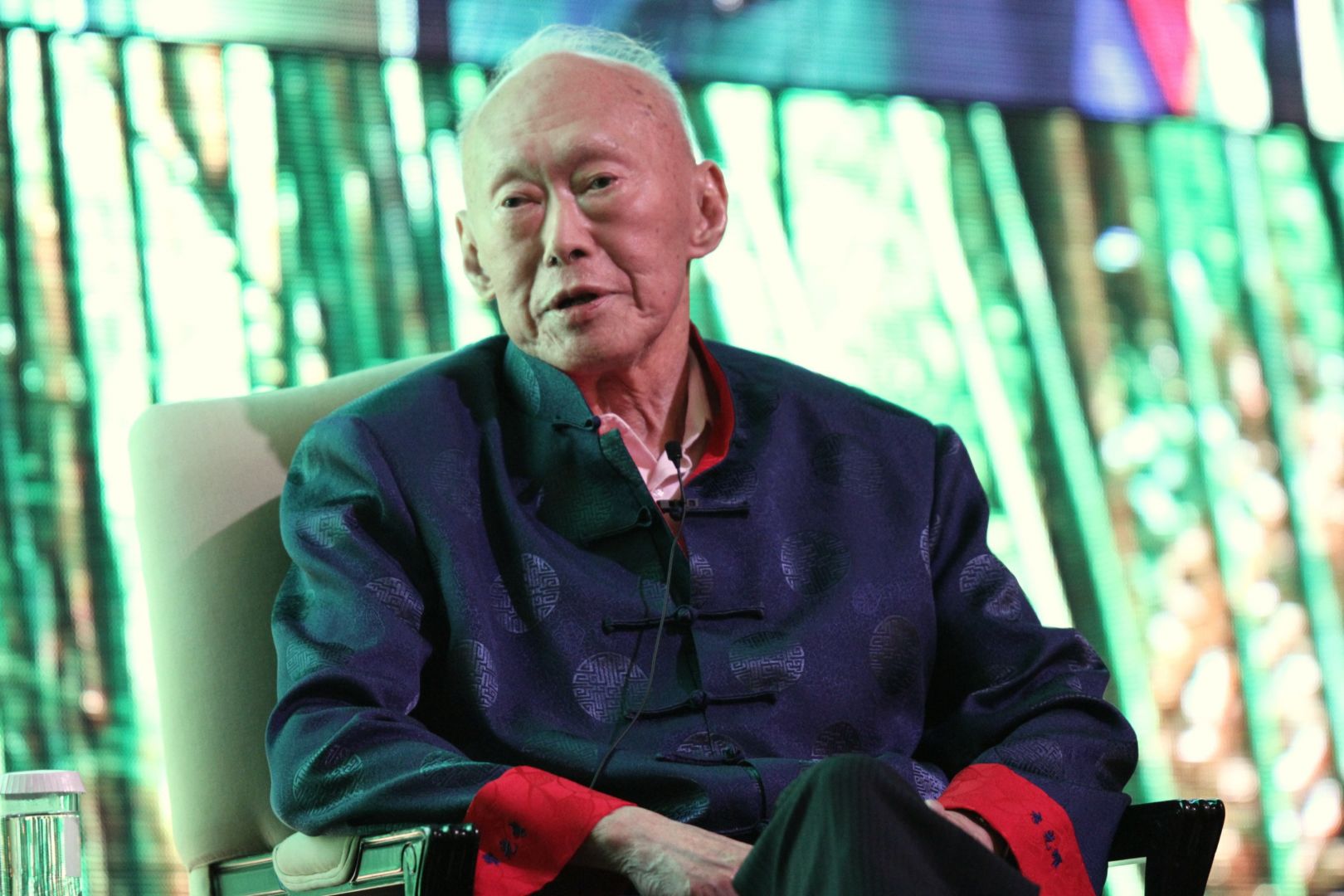
The late former Prime Minister Lee Kuan Yew (Hakka for 李光耀 – Lî Guang Yào in Mandarin) born “Harry Lee Kuan Yew” and known simply as “Harry” to close friends, family, and his late wife, was born in Singapore on September 16, 1923,  a third-generation descendant of immigrants from the Hakka dialect-group hailing from China’s Guangdong Province. He finished law at Cambridge University, England. In 1954, he formed the People’s Action Party, which won the first Singapore general election five years later. Though dominantly English-speaking and fluent in Malay, but originally unable to competently converse in Mandarin or other Chinese dialects, he decided at an advanced age to exert intense effort to learn Mandarin and later Hokkien, because he needed both for political campaigns at the grassroots level. He also changed his public persona from being a British-educated British-accented upper-class Anglophile named “Harry Lee” to being known in public and in the papers as “Lee Kuan Yew.”
Lee Kuan Yew  became Singapore’s first prime minister in 1959, at the age of thirty-five and quickly developed Singapore’s economy through the aggressive invitation of foreign Multinational Corporations by avoiding economic protectionism and creating a business-friendly environment in order to concentrate on the immediate task of job creation for the ordinary citizens. In November 1990, he resigned the office to assume the advisory post of Senior Minister in the Singapore Cabinet and in 2004, took on the title of the “emeritus” role of  Minister Mentor when his successor as Prime Minister, Goh Chok Tong (吳作棟)became Senior Minister after Goh resigned the premiership.
He died on Monday, 23 March 2015 after a battle with severe pneumonia.
* * *
Lee Hsien-Loong
Lee Kuan Yew’s son, Lee Hsien-Loong (李顯龍) now serves as Singapore’s Prime Minister after so many years of being given the most difficult and challenging of job assignments, proving himself academically superior to his peers at school, and needing to prove his worth purely through merit by rising up through the ranks in both the military and the civil service (he became a Brigadier-General), and not because he is the son of Lee Kuan Yew.

Lee Kuan Yew on Filipinos and the Philippines


We invite all who read this article to please learn more about the Parliamentary System in order to understand better on why the way it works tends to produce better-quality leaders than Presidential Systems.
This article was originally published on the 10th of January 2011 in both Get Real Philippines and the old Antipinoy website.)
Lee Kuan Yew
***
One of the best ways for us Filipinos to realize the Truth about ourselves and our country is to find out how people from other countries observe us and our society. This is best done when the one observing and describing us is an extremely well-informed and highly intelligent non-Filipino who has had his own fair share of problems similar to the ones that the Philippines has gone through (or is currently going through), and had a hand in actual problem-solving for his own country’s originally Philippines-like issues.
An example of such a person is Singaporean Minister Mentor and former Prime Minister Lee Kuan Yew. Hailed as the Father of Modern Singapore, Lee Kuan Yew and his People’s Action Party were able to craft appropriate solutions for the issues and problems that were hounding Singapore early on in its history as a newly-independent Third World country with no natural resources, a huge number of uneducated people, and security problems resulting from the initial hostility of its neighbors towards it, among many other problems and managed to turn it into Southeast Asia’s oasis of prosperity and development and a First World hub within a region of  what were then  known as “Third World” countries.
The following excerpt which features Minister Mentor Lee Kuan Yew’s observations on the Philippines and of Filipinos should at least entice the readers of www.antipinoy.com to immediately pay a visit to the local Bookstore (those which specialize in real books – not school supplies!) and ask around for copies of the book from whence it came –  “From Third World to First.”
Far from just being a book about Lee Kuan Yew or Singapore’s history of development, “From Third World to First” is also a collection of invaluable lessons in economic development, policy-making, international diplomacy, statecraft, domestic politics, history & culture, behavioural and cultural reform,meritocracy, the principles of pragmatic idealism, and examples of ingenious out-of-the-box thinking. In it, Lee Kuan Yew himself also describes how he and his team of technocrats were able to reform the culture, mindset, and behavior of a people who in the 1950’s were still predisposed to spitting in public and other unhygienic behavior as a result of carefully-planned behavioural-modification policies and systems which have turned Singapore into one of the cleanest and most orderly societies in Asia as well as well as the World.
This book can no doubt serve as a helpful handbook for any would-be leader of any Third World country looking to move into the First World.
I truly encourage all Filipinos who work in government, have an interest in government, or are looking for lessons on how to craft solutions to the problems of the Philippines to please buy a copy of this book. I assure everyone that “From Third World to First” will not just be eye-opening and enlightening, it will also enable Filipinos to understand that finding solutions to our problems is very possible if only we adopted a can-do attitude, a bias for intense learning and analysis, a solid framework for critical analysis and big-picture thinking, as well as a grounding in practical & creative out-of-the-boxproblem-solving.
If Singapore with Lee Kuan Yew and the People’s Action Party could do it, why can’t we?
Source: https://correctphilippines.org/lky_phil/